
A puddle on your patio after a heavy rain might seem like a minor inconvenience. But when water collects in the same spot after every storm, it deserves a closer look. Standing water can make outdoor surfaces slippery, contribute to deterioration, and point to drainage problems that may also affect your basement or foundation.
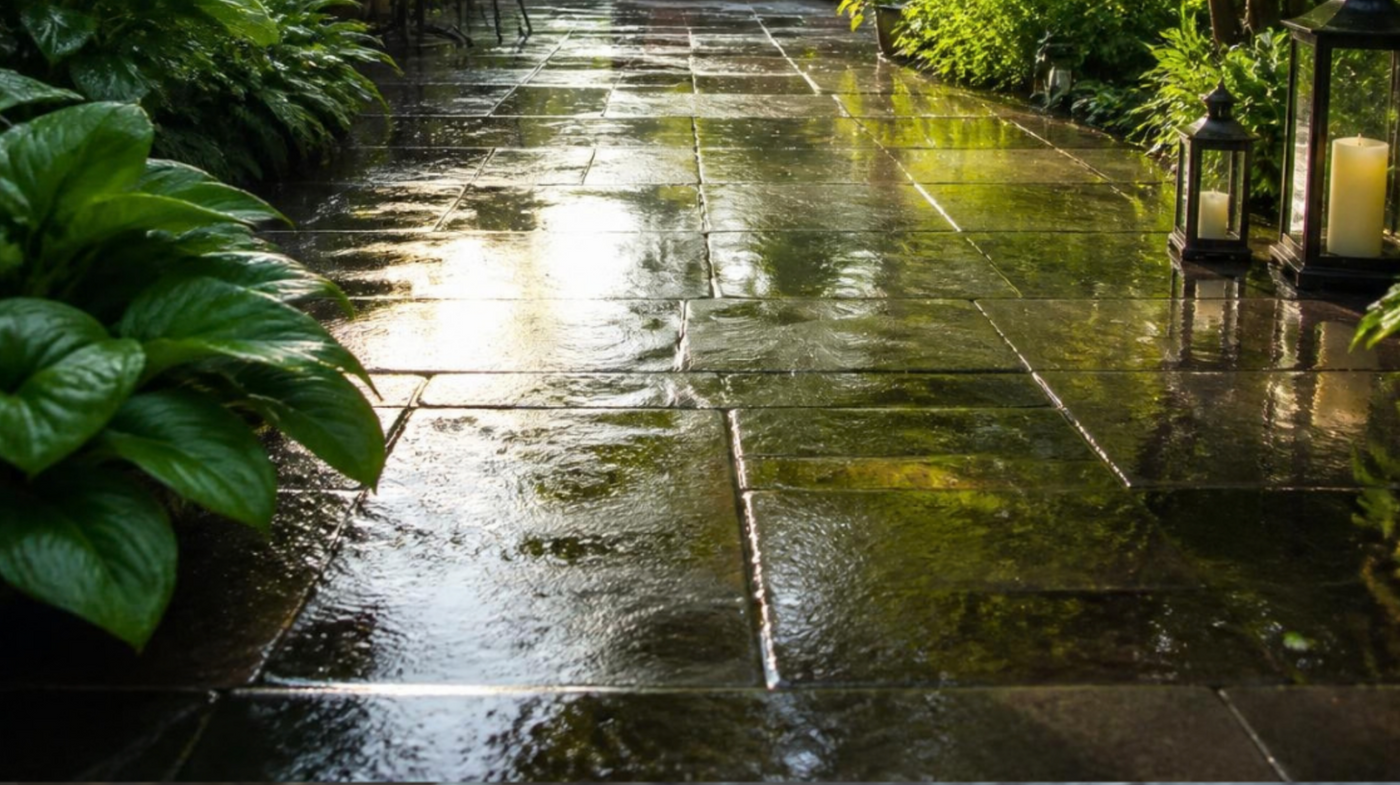
How to Address Water Pooling Around Patios, Walkways, and Driveways
For Pittsburgh homeowners, rain and seasonal snowmelt can make these trouble spots especially noticeable. The right solution starts with understanding where the water comes from, why it stays, and where it can safely go.
Find the Source of the Water
Before deciding how to fix a puddle, watch what happens during a rainfall from a safe location. Does water flow down the driveway? Spill over a gutter? Run from the yard onto a walkway? These observations can help identify the source rather than just the place where water collects.
Gutters and downspouts are a good starting point. A clogged gutter can overflow beside the house, while a downspout that empties onto a patio may overwhelm an area that otherwise drains adequately. Keep gutters clear and check that downspouts direct runoff toward an appropriate drainage location.
Pay attention to nearby landscaping, too. Soil, mulch, and debris can collect along the edge of pavement and block the path water previously followed. Sometimes, removing that buildup helps. Other situations require changes to the surrounding grade or a drainage system.
Check the Slope and Surface Condition
Patios, walkways, and driveways need a suitable slope so water can move away instead of settling into low areas. If a surface is nearly flat, slopes toward the house, or has settled unevenly, pooling may continue even after gutters are cleaned.
Look for sunken pavers, depressed sections of concrete, and water collecting where pavement meets the foundation. These conditions may indicate that the surface needs correction, although drainage and surface repairs should be considered together.
Simply covering a low spot without addressing the cause can leave you with the same problem later. Likewise, adding soil beside a walkway can accidentally trap more water. A professional evaluation can help determine whether regrading, surface repair, drainage installation, or a combination makes sense.
Choose Drainage That Fits the Problem
Different drainage systems serve different purposes. The best choice depends on the amount of water, the layout of your property, and the availability of a suitable discharge point.
Surface drains collect water from areas where runoff gathers. A catch basin may help at a specific low point, while a channel drain can intercept water moving across a driveway or along a patio. Proper placement matters: the drain must capture the flow and carry it somewhere appropriate.
Exterior French drains may be useful when saturated soil or water moving through the ground contributes to the problem. These systems typically use gravel and perforated pipe to collect and redirect water. They are not interchangeable with every surface drain, so choosing one should follow an assessment of your property.
Any drainage installation also needs a plan for discharge. Moving water away from your patio is only part of the job. The outlet should avoid creating another problem near your foundation, on neighboring property, or along a public walkway.
Consider What Pooling Means for Your Foundation
Water collecting beside the house deserves particular attention. Persistent moisture near foundation walls can contribute to basement water intrusion, especially where cracks or other openings already exist.
If outdoor pooling happens alongside damp basement walls, water at the floor edge, or recurring basement leaks, mention those symptoms during an inspection. Addressing the outdoor puddle alone may not resolve the full issue.
Steel City Waterstoppers and Foundation Repair provides surface drainage, interior and exterior French drains, basement waterproofing, and foundation repair. Looking at these conditions together helps identify a solution suited to the home.
Address Recurring Pooling Before It Gets Worse
After improvements, keep drains clear and watch the area during future storms. Recurring pooling is a reason to reassess the drainage.
Contact Steel City Waterstoppers and Foundation Repair for a free inspection and estimate. We can evaluate water pooling around your patio, walkway, or driveway and recommend practical next steps to help protect your Pittsburgh property.