
Downspouts play an important role in protecting your home from water damage. Their job is simple: collect rainwater from your gutters and direct it safely away from your house. But when downspouts empty too close to the foundation, point toward the home, or drain into areas with poor grading, that water can quickly become a problem.
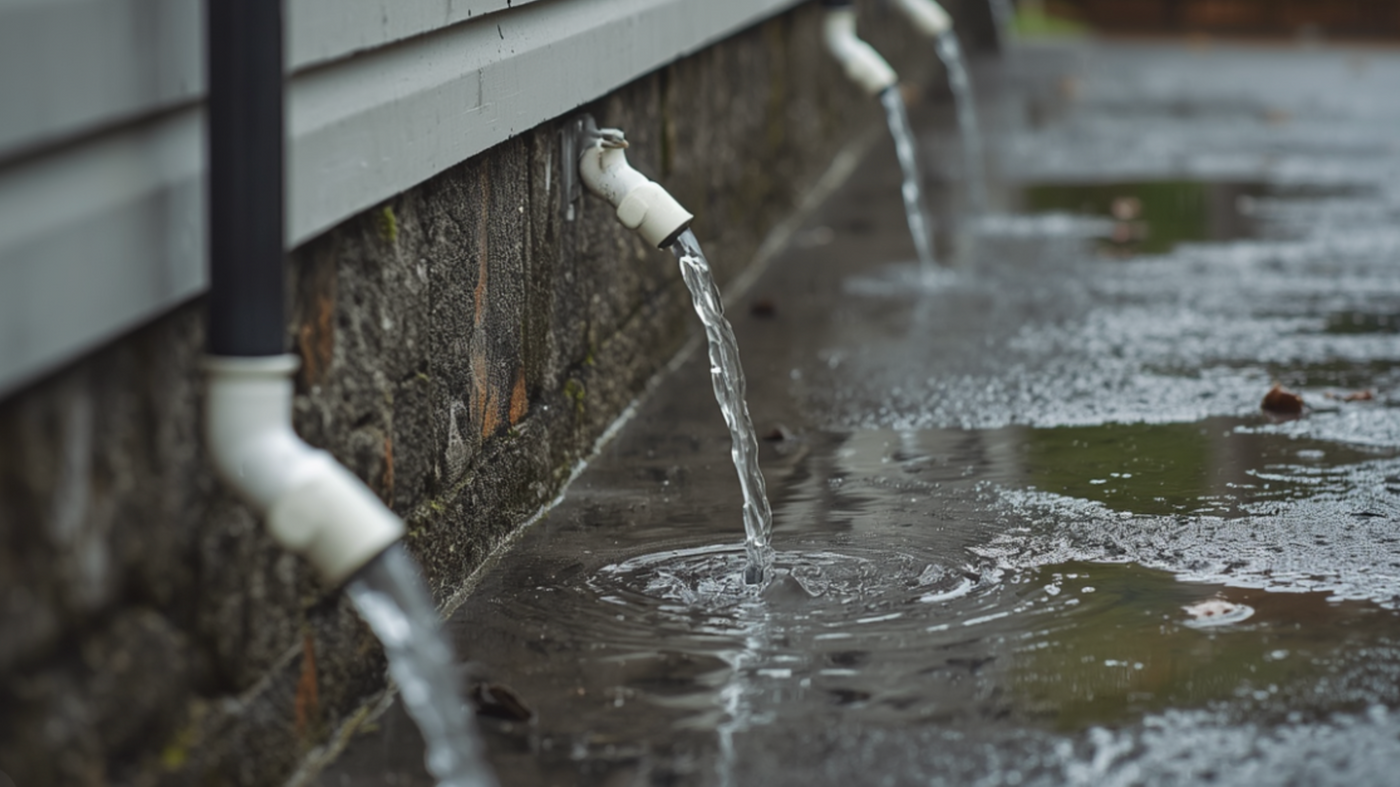
Where Should Downspouts Drain Around Your Home?
At Steel City Waterstoppers & Foundation Repair, we regularly see basement moisture and foundation issues that are made worse by improper drainage. Understanding where your downspouts should drain can help you protect your basement, foundation, landscaping, and property from unnecessary water damage.
Why Downspout Drainage Matters
During a heavy rainstorm, a large amount of water can run off your roof in a short period of time. Your gutter system collects that water and directs it toward the downspouts.
If a downspout ends directly beside your foundation, all of that roof runoff becomes concentrated in one small area. The surrounding soil can quickly become saturated, increasing hydrostatic pressure against basement and foundation walls.
Over time, this can contribute to basement leaks, foundation cracks, bowing walls, soil erosion, and other moisture-related problems.
Proper downspout drainage helps move that water away before it has a chance to cause damage.
How Far Should Downspouts Extend From the House?
As a general rule, downspouts should discharge water several feet away from your foundation.
In many situations, extending the downspout approximately 5 to 10 feet away from the home can significantly improve drainage. However, the ideal distance depends on factors such as the slope of your property, soil conditions, landscaping, and where the water ultimately flows.
Simply adding a longer extension is not always enough. The water also needs somewhere safe to go.
Make Sure Water Flows Away From the Foundation
Proper grading is just as important as the length of your downspout.
The ground surrounding your home should slope away from the foundation so rainwater naturally moves toward a lower area of the property. If your yard slopes toward the house, water discharged several feet away may simply flow back toward the foundation.
Watch your property during or shortly after a heavy rain. If you see puddles forming beside the house or water flowing back toward the basement walls, your drainage system may need attention.
Use Downspout Extensions
One of the simplest solutions for improper drainage is a downspout extension.
Extensions attach to the bottom of your existing downspout and carry water farther away from the home. They are available in several styles, including rigid extensions, flexible pipes, and roll-out systems.
The important thing is to position the extension where it can safely discharge water without creating another problem elsewhere on the property.
Consider Underground Drainage Systems
For some homes, above-ground extensions are not practical or attractive. An underground downspout drainage system can provide a cleaner solution.
These systems typically connect the downspout to underground piping that carries water away from the foundation and releases it at a safe location.
Proper installation is important. Underground drainage lines need the correct slope and outlet location to prevent standing water, backups, or clogs.
Avoid Draining Toward Driveways or Walkways
Be careful about directing downspouts toward areas where water can create other hazards.
Water flowing across sidewalks and driveways can create slippery conditions and may contribute to cracking or deterioration. During cold Pennsylvania winters, drainage across paved surfaces can also freeze and create dangerous ice.
Whenever possible, direct water toward a landscaped area or drainage location where it can disperse safely.
Do Not Send Water Toward a Neighbor's Property
Your downspout system should manage water on your own property whenever possible.
Redirecting large amounts of roof runoff toward a neighboring property can create drainage disputes and may contribute to erosion, flooding, or foundation problems for another homeowner.
A properly designed drainage system should move water away from your home while considering the surrounding properties and overall landscape.
Watch for Signs of Poor Drainage
Sometimes your home will tell you that your downspouts are not doing their job.
Warning signs can include water pooling near the foundation, damp basement walls, musty odors, basement leaks after heavy rain, erosion beneath downspouts, foundation cracks, or unusually wet landscaping around the house.
If these problems continue even after extending your downspouts, there may be a larger waterproofing or drainage issue that needs professional attention.
Protect Your Foundation From Water Damage
Proper downspout drainage is one of the simplest ways to reduce the amount of water collecting around your foundation. Directing roof runoff several feet away, maintaining proper grading, and making sure water has a safe place to drain can make a significant difference.
If you are experiencing basement leaks, foundation cracks, standing water, or other moisture problems, Steel City Waterstoppers & Foundation Repair can help identify the source of the issue and recommend the right solution for your home.
Contact Steel City Waterstoppers & Foundation Repair today to schedule an inspection and learn how you can better protect your basement and foundation from unwanted water.